
Money, explained in plain English
83 free guides and 15 free calculators for people starting out. What do you want to learn about?

Latest
Fresh off the press
Investing
What a Recession Actually Does to Your Money in Your 20s (And the 3 Moves Worth Making Before One)
Nobody will tell you a recession started until months after it began. The committee that dates US recessions has taken anywhere from four to twelve months to make the call, so every plan built on reacting to the news fires late. Which is fine, because at 24 the thing a downturn threatens isn't the portfolio you won't touch for forty years. It's the paycheck that covers rent next month, and workers aged 20 to 24 already carry roughly double the unemployment rate of people aged 35 to 44. Here's what the data says a recession really costs someone your age, the three moves worth making before one arrives, and the two instincts that quietly do the most damage.
Personal Finance
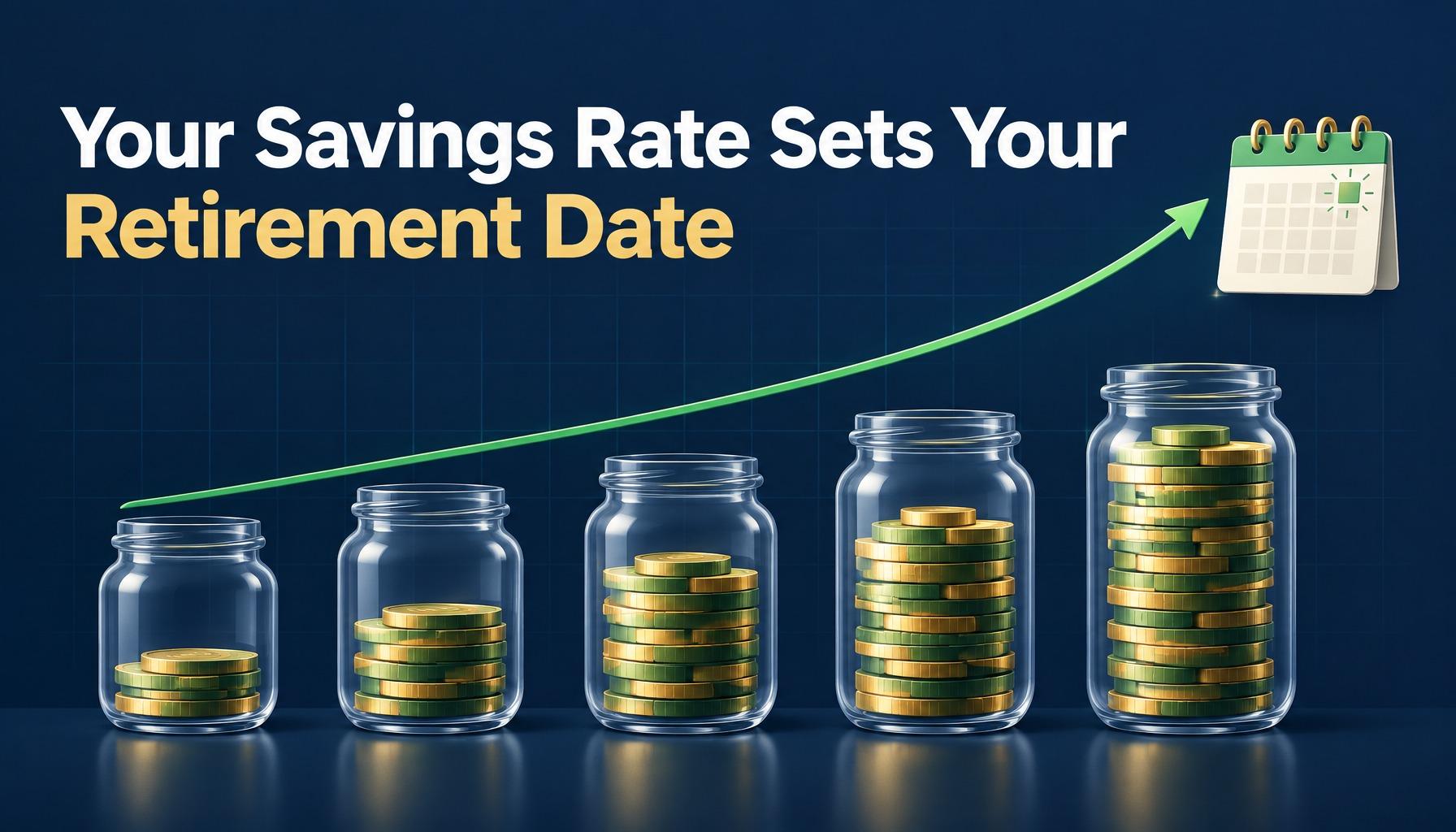
Your Savings Rate, Not Your Salary, Decides When You Can Stop Working
A raise does nothing for your retirement date. Spend it and you've moved neither number that matters. Save it and you've moved both at once, because the finish line is a multiple of what you spend. Two people on $70,000 can finish 19 years apart on that difference alone.

Investing
The Recency Bias That Quietly Makes Investors Buy High and Sell Low
None of 2021's winning funds were still winning by 2024. That isn't bad luck, it's the ordinary behavior of markets. Recency bias is what makes you buy those funds anyway, usually right at the point where the run ends. Morningstar puts the cost of that habit at 1.2 percentage points a year, though a paper forthcoming in the Financial Analysts Journal argues the real figure is closer to 0.10. Here's the honest number, why the scary version gets quoted anyway, and the three-part rule that quietly protects you either way.

Free tools
Crunch the numbers
Mortgage Calculator
Estimate your monthly payment + amortization schedule.
Index Investing Calculator
Project long-term portfolio growth.
Credit Card Debt Calculator
See how fast you can pay off balances.
Dividend Calculator
See what dividend investing could pay you.
Compound Interest Calculator
See how your savings grow with interest on interest.
Emergency Fund Calculator
How big a safety net, and how long to build it.
Browse by topic
Find your next read
49 articles
Investing
Build long-term wealth with index funds, stocks, and ETFs.
Browse
46 articles
Personal Finance
Budget, save, and crush debt without the jargon.
Browse
48 articles
Financial Literacy
Master the fundamentals from zero — no background needed.
Browse
10 articles
Real Estate
Buying, mortgages, and the realities of home ownership.
Browse
3 articles
Crypto
Understand the basics without the hype cycles.
Browse
New to the jargon? Start with the money glossary: 55 terms, from compound interest to the 4% rule, explained in plain English.
Start here
If you’re just getting started
A short reading arc through the fundamentals — read these in order and you’ll have the foundation almost everything else builds on.

Investing
What Is Financial Literacy? What Americans Get Wrong in 2026 (and How to Fix Yours)
US adults answered just 47% of basic money questions correctly in 2026, and Gen Z scored 38%. What financial literacy means, where people slip and how to build yours.
Personal Finance
How to Build an Emergency Fund: A 7-Step Plan That Works on a Tight Budget
Only 63% of adults could cover a $400 surprise with cash. Here's how to build an emergency fund in two stages, where to keep it, and a plan in real numbers.

Investing
Index Investing 101 — The Beginner’s Guide to Wealth Building
Picture your savings quietly growing, almost without effort, while you get on with what matters most. Index investing makes this possible by tracking broad market indices with minimal cost and fuss. In fact, S&P Dow Jones Indices reports that over 65% of active large-cap US equity funds underperformed the S&P 500 in 2024, illustrating the power of passive strategies to deliver steady market returns. Whether you’re saving for a first home or planning your retirement, harnessing index funds can simplify your financial journey and help you stay on track. In this guide, we’ll walk you through exactly how to start index investing with confidence and clarity.
83
free guides
15
free tools
0
paywalls
5
topics