Financial Literacy
Think You Can Afford That Dream Home? The Harsh Reality of Being House Poor
Education, not financial advice. This page may contain affiliate links: if you buy through one, Alpha Investing Group may earn a commission at no extra cost to you. How we earn money · Editorial policy
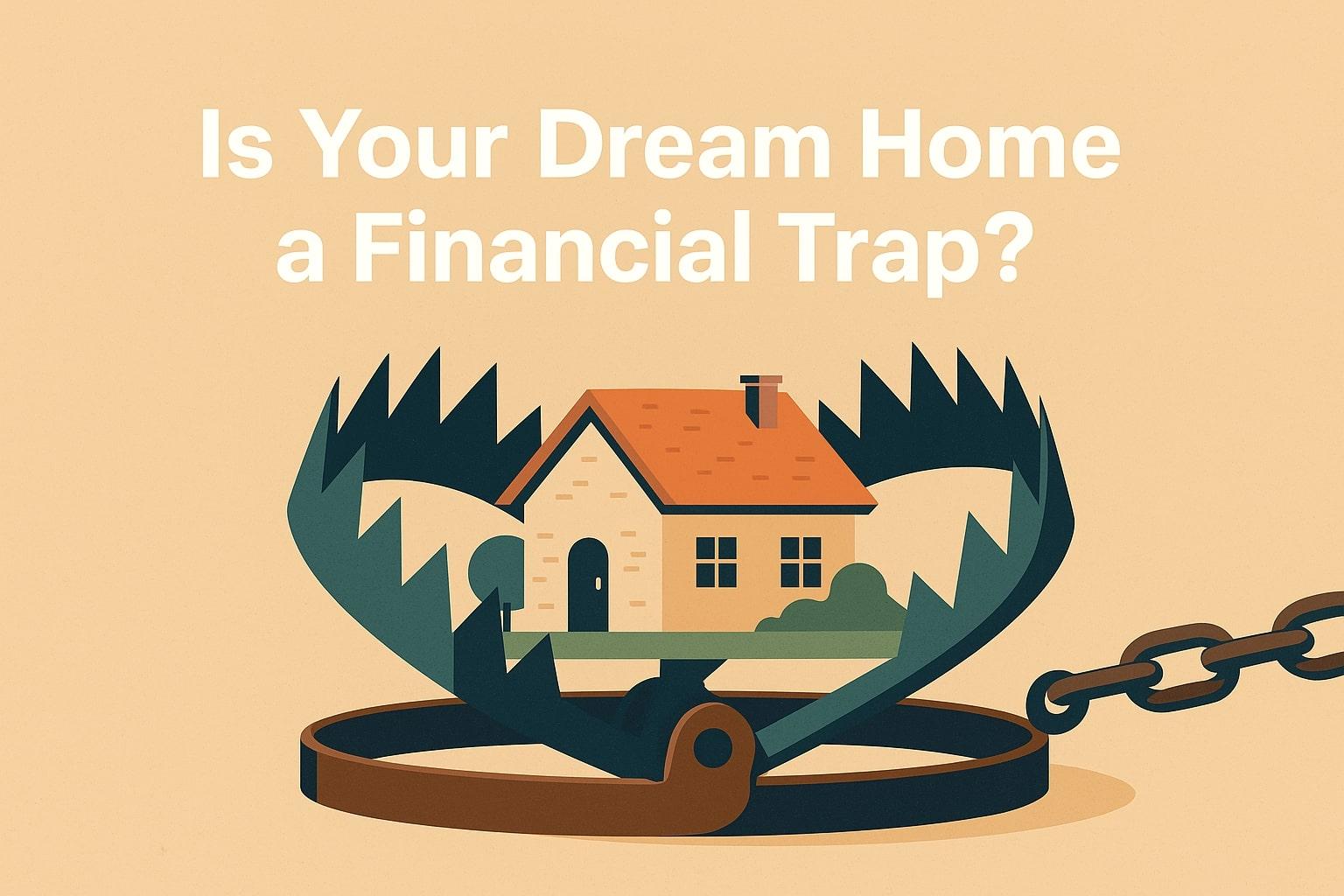
You might believe that owning a home means you’ve made it, that you have achieved the ultimate milestone of financial success.
But for many people, that dream hides a more sobering reality: what looks like security can quickly become a financial trap. Official data from the Office for National Statistics shows that in 2023 the typical house in England cost about 8.3 times the average full-time salary, which was far above the five-times-income benchmark often used to define “affordable.” Meanwhile, rising interest rates have pushed mortgage payments sharply higher, leaving many households feeling squeezed. Too many people focus only on getting a “dream home,” without considering what it really costs over time, and end up compromising essential goals like saving, investing or building wealth.
In the end, buying a home shouldn’t just be about getting the keys; it should make your financial future stronger. Not weaker.
The real danger of being house poor comes from the slow, silent, and sometimes even invisible, expenses that rarely make it into glossy listings or mortgage calculators. These are the costs that quietly erode your financial stability, limit your choices and keep you trapped in a lifestyle that looks impressive but feels suffocating.
And if you don’t account for them early, they will shape your entire financial future without your permission.
1. The Upfront Costs That Hit You Before You Even Move In
Most buyers focus entirely on their deposit, yet the real financial shock often comes from the mountain of upfront costs that arrive before the keys are even in your hand.
These fees, including but not limited to stamp duty, legal charges and surveys, stack up fast, and they catch people off guard far more often than they should. What begins as a “manageable” buying process suddenly becomes a list of invoices you never budgeted for.
Just to put it in perspective, stamp duty alone on a £450,000 property in England can easily exceed £10,000, depending on your circumstances, according to HMRC’s own calculator. And that’s before factoring in £1,000 - £2,000 for solicitors, £300 - £1,000 for surveys and any mortgage arrangement fees.
By the time it’s all paid, many buyers start their new chapter with almost no cash left. And walking into a home with an empty savings account means one unexpected expense can flip your finances upside down. In short, the upfront costs don’t just hurt, they reset your entire financial foundation. They also remove your margin of safety at the exact moment when you need it most.
If you’re not careful, you start homeownership already stretched thin.
And that’s the first warning sign that you’re heading towards being house poor.
2. Service Charges and HOA-Style Fees That Won’t Stop Rising
People expect council tax and property tax; they don’t expect the relentless add-ons that come with flats, new-build estates or community-managed areas.
These charges can look harmless at first, but they quietly grow into a separate second mortgage, not to mention that these fees usually rise every year, and you have almost no control over them. What seems like a simple maintenance fee quickly transforms into a recurring bill that funds everything from communal cleaning to repairs you didn’t ask for.
Many new-build estates in the UK now charge hundreds to thousands annually in estate management fees, and some developments have seen double-digit percentage increases in a single year. The escalation catches owners completely off guard.
And once you’re locked in, opting out isn’t an option.
It’s a cost that creeps, grows and eventually squeezes.
Which is why ignoring these charges is one of the quickest ways to lose your financial flexibility.
3. Insurance That Costs More Than You Expect
Home insurance feels like a small line item until you actually start paying for it.
Most people underestimate it entirely, partly because they’ve never insured anything worth hundreds of thousands before. Insurance premiums have been climbing, especially in areas exposed to flooding, storms or high rebuild costs.
Then there’s contents insurance, accidental-damage add-ons and sometimes lender-required protection. And each premium quietly chips away at the budget you thought you had. And each renewal reminds you that owning a home comes with risks you never had to price in as a renter.
It tightens the financial belt one notch at a time.
Hence, if you want to avoid being house poor, make sure to include insurance in your budgeting.
4. Maintenance and Repairs That Never End
The biggest lie in property ownership is that once you’ve bought the place, the hard part is over.
What buyers don’t realise is that homes age, break, leak, crack and malfunction, often at the worst possible moment. You don’t truly understand the weight of homeownership until the boiler fails in winter or the roof starts leaking after a storm. According to a 2025 guide from HomeGuide, the average home maintenance cost can range from $4,000 - $22,000 per year.
Homeowners often assume these are once-in-a-decade expenses, but many find themselves dealing with multiple repairs within their first three years. These costs are inconvenient not just financially but emotionally. They disrupt plans, drain savings and force you into decisions you didn’t want to make.
Repairs are the silent tax of homeownership that renters never face. And this tax is unpredictable, relentless and always more expensive than you expect.
It reminds you that a “dream home” is only a dream until something breaks.
5. The Hidden Opportunity Cost of Locking Up Your Cash
Most people obsess over the size of their deposit but never consider what happens to that money once it’s locked inside a property.
The moment you hand over that deposit, it stops working for you. That cash could have been compounding, growing and strengthening your financial position elsewhere. Once the money is sunk into the house, it’s no longer available for investing, emergencies or opportunities that require liquidity.
Most people don’t think about this because buying a home feels like “the responsible thing to do.” But opportunity cost is real, and it can hold you back for years.
When your cash is trapped, so are your options. You can’t pivot, invest aggressively or respond to unexpected life changes.
Your home becomes not just a place to live, but a vault that keeps your money locked away.
Understanding opportunity cost is one of the most overlooked parts of avoiding the house-poor trap.
6. The Flexibility You Give Up Without Realising
There’s a freedom that comes with renting that homeowners often forget about.
The moment you buy, your life becomes tied to the property in ways you didn’t anticipate. Losing flexibility limits your choices, your mobility and your ability to adapt as life evolves.
Once you own a home, moving becomes expensive, stressful and slow. Job opportunities in different cities suddenly feel harder to accept because selling is a process measured in months, not days. The property that once felt like a milestone can quickly feel like an anchor.
And that anchor holds you down when you most need agility.
This loss of flexibility is rarely discussed, yet it shapes everything from your career options to your lifestyle decisions. And once you feel stuck, the emotional weight is just as heavy as the financial one.
Flexibility isn’t a luxury. It’s a protective layer around your life choices.
Which is why giving it up too early can be a costly mistake.
In a nutshell…
Buying a home should be a step toward stability, not a trap that drains your financial and personal freedom.
If the numbers only work when everything goes perfectly, the reality is that they don’t work at all. In a world where most people underestimate the long-term cost of ownership, the real danger isn’t missing out on your dream home. It’s locking yourself into a lifestyle you can’t afford to sustain.
In the end, a home isn’t truly a dream if it costs you your future.