
The library
Every guide we’ve written
49 free guides on investing, personal finance, real estate, and crypto — written for younger readers building financial literacy from zero.
New to some of the terms? The money glossary explains 55 of them in plain English.
Investing
What a Recession Actually Does to Your Money in Your 20s (And the 3 Moves Worth Making Before One)
Nobody will tell you a recession started until months after it began. The committee that dates US recessions has taken anywhere from four to twelve months to make the call, so every plan built on reacting to the news fires late. Which is fine, because at 24 the thing a downturn threatens isn't the portfolio you won't touch for forty years. It's the paycheck that covers rent next month, and workers aged 20 to 24 already carry roughly double the unemployment rate of people aged 35 to 44. Here's what the data says a recession really costs someone your age, the three moves worth making before one arrives, and the two instincts that quietly do the most damage.
Investing
The Recency Bias That Quietly Makes Investors Buy High and Sell Low
None of 2021's winning funds were still winning by 2024. That isn't bad luck, it's the ordinary behavior of markets. Recency bias is what makes you buy those funds anyway, usually right at the point where the run ends. Morningstar puts the cost of that habit at 1.2 percentage points a year, though a paper forthcoming in the Financial Analysts Journal argues the real figure is closer to 0.10. Here's the honest number, why the scary version gets quoted anyway, and the three-part rule that quietly protects you either way.

Investing
Can You Trust AI for Financial Advice? Seven Chatbots Gave Seven Answers
Your chatbot is guessing, and it sounds exactly the same as when it isn't. Researchers gave seven AI tools an identical household profile and asked how much the family should hold in emergency savings. The recommendations came back anywhere from about $21,000 to $37,500. Ask the same tools for a safe retirement withdrawal rate, though, and they almost all said 4%. Here's what that split tells you about which money questions AI is safe on, the one tool that cut its stock recommendation in half when only the race of the person changed, and the ninety-second test to run before you act on anything a chatbot tells you.
Investing
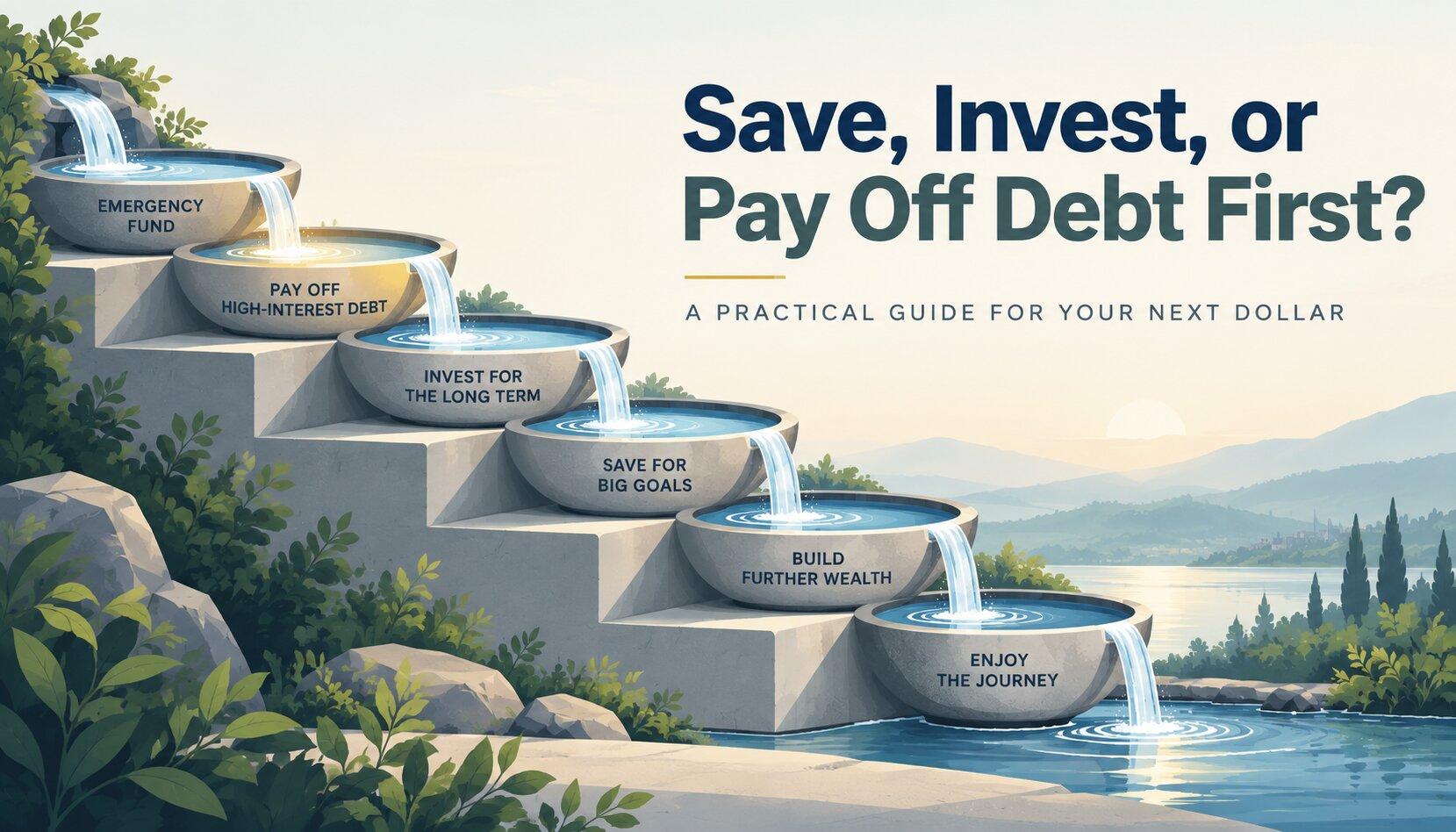
Save, Invest, or Pay Off Debt First? The Financial Order of Operations
Your employer match beats paying off a credit card. Most beginner guides put the emergency fund first, a few open with insurance deductibles, and that is why nobody agrees on step one. The tiebreaker is simpler than the arguing suggests. Rank every dollar by what it earns you, then pull just enough cash forward that a surprise never pushes you back onto the card. Here is the full seven-step order with the 2026 contribution limits, one worked example on a $55,000 salary that quietly runs out halfway through step five, and the two moments when breaking the order is the right call.
Investing
What a Vanguard Index Fund and Doing Absolutely Nothing Have In Common (And Why It's Made Lazy Investors Rich)
Picking a winning fund manager is now worse than random. S&P tracked every large-cap fund that finished above the median and asked how many were still there afterward. The answer was 4.5%. If the whole thing were a coin flip, you would have expected 6.25%. Here's the twenty-year scoreboard, the honest evidence that cuts against my own argument, and the four things that doing nothing quietly demands of you.
Investing
How Much of Your Portfolio Should Be in Stocks at Your Age? (And Why '100 Minus Your Age' Is Outdated)
Your retirement got three and a half years longer. The rule that tells you how much to hold in stocks was calibrated against a 1980 retirement, and it has not moved since. A 65-year-old back then could expect 16.9 more years of life. Today it's 20.5, and "100 minus your age" still says exactly what it said forty years ago. Here's where the rule actually broke, the 30-point gap between it and a real glide path at 40, and the one swap that fixes it without turning your portfolio into a hobby.
Investing
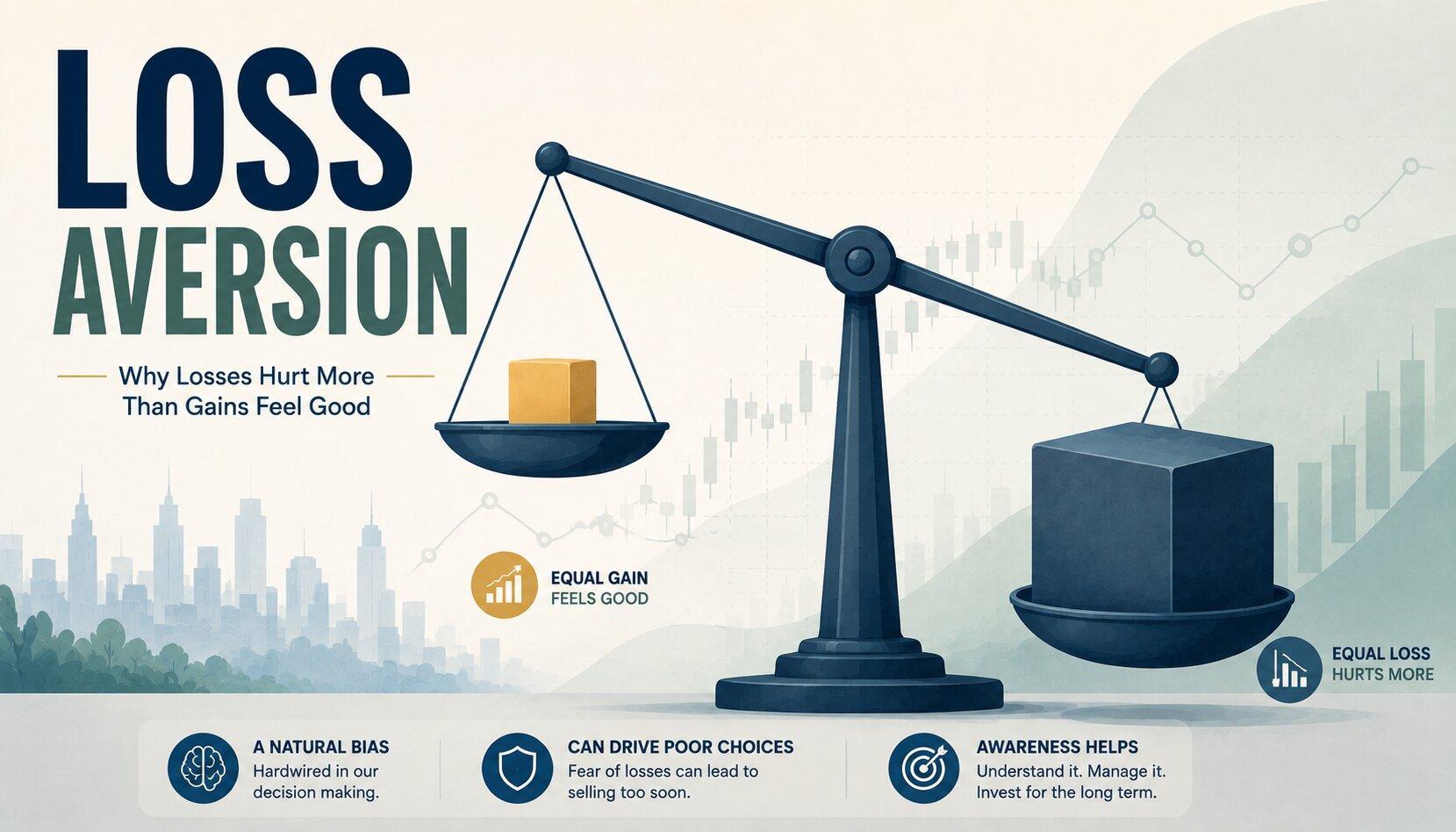
Why a $100 Loss Hurts Twice as Much as a $100 Gain Feels Good (And Why It's Quietly Costing You)
Your brain charges you twice as much for a loss as it pays you for a gain. That single bit of wiring is why smart people sell at the bottom, cling to their worst stock for years, and hide in cash they can't retire on. It even has a price tag: Morningstar pegs the average investor's self-inflicted cost at about a point of return every year. The strange part is that knowing all this doesn't fix it. Here's where the 2:1 number comes from, what it quietly costs in real dollars, and the one boring habit that shrinks the damage more than willpower ever will.
Investing
How to Start Investing With $100 a Month (Without Picking Stocks or Paying Fees)
Nobody who waited to "have enough" to invest is glad they waited. $100 a month sounds too small to bother with, which is exactly why most people never start and quietly lose a decade. That decade is the expensive part, because time does far more of the work than the amount you put in. The good news is the whole thing fits on one page, and none of it involves picking a stock. Here's the first-year plan: the account to open first, the one fund to buy, and the automation that makes it run without you.
Investing
Should You Pay Off Your Mortgage Early or Invest the Difference? Here's the Maths
Paying off your mortgage early is now a guaranteed 6.5% return. A few years ago, with 3% loans, that was an easy pass in favour of stocks. At today's rates the gap is small enough that the choice genuinely matters, and the tax-break argument most people lean on barely applies anymore. The honest answer is a number, not a gut feeling. Here's the simple maths, the tax reality most guides get wrong, and the split that usually beats picking a side.
Investing
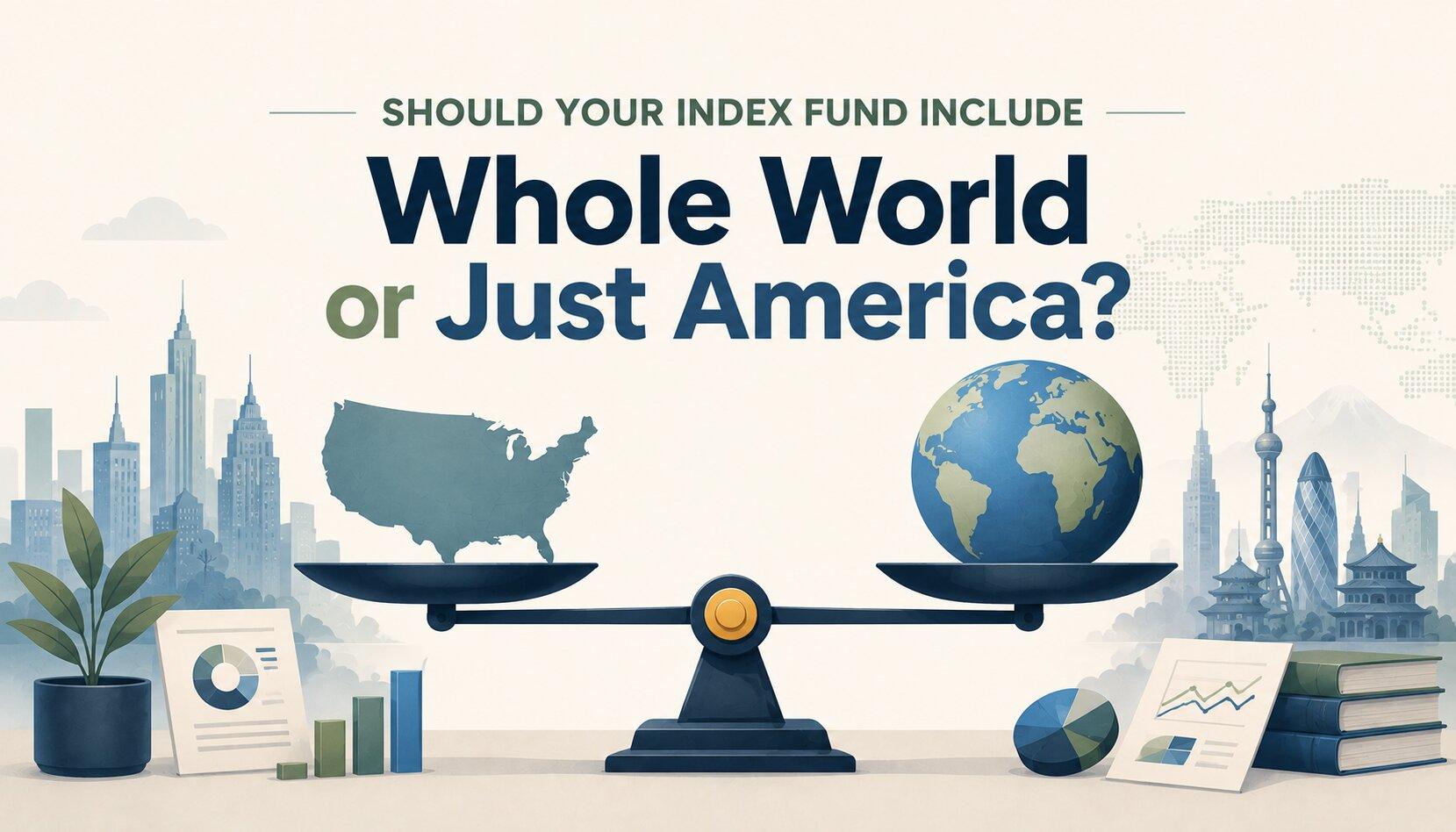
US or Whole-World Index Fund? The Honest Trade-off
A total world fund is still about 62% US, so the real choice is all-America or mostly-America. What 2025 changed, three setups compared, and the 20-40% rule.
Investing
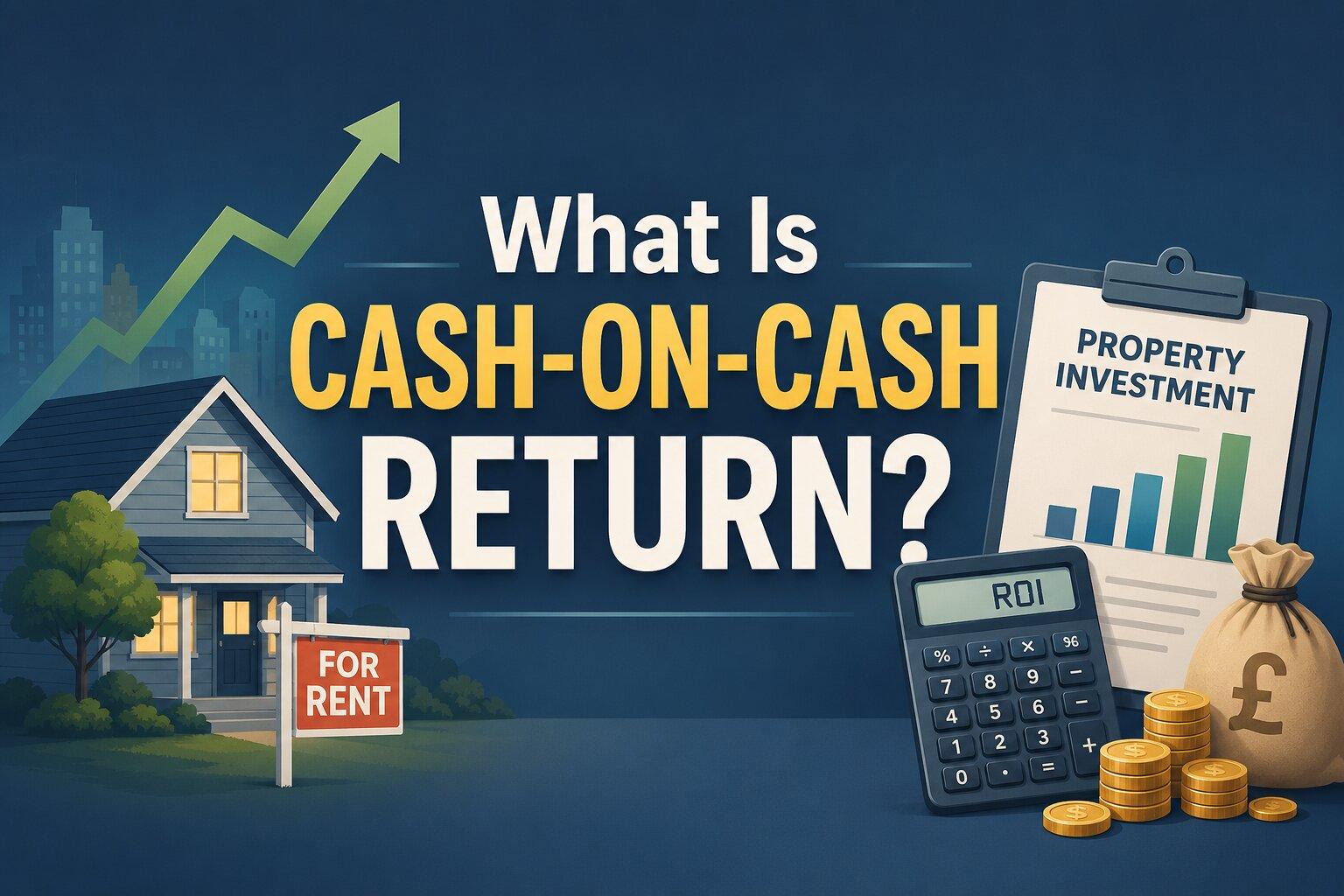
What Is Cash-on-Cash Return? The Golden Metric You Must Know Before Investing In Real Estate
Most property investors think they are making money, until they actually run the numbers. A high rental yield or rising house price feels reassuring, but neither tells you what your cash is really doing. Seasoned investors, lenders, and professionals care about one thing above all else: how efficiently your invested cash turns into real income. That is why the smartest real estate decisions are grounded in a metric that cuts through leverage, financing, and paper profits. Cash-on-cash return is the golden metric that separates properties that look good from investments that actually work.
Investing
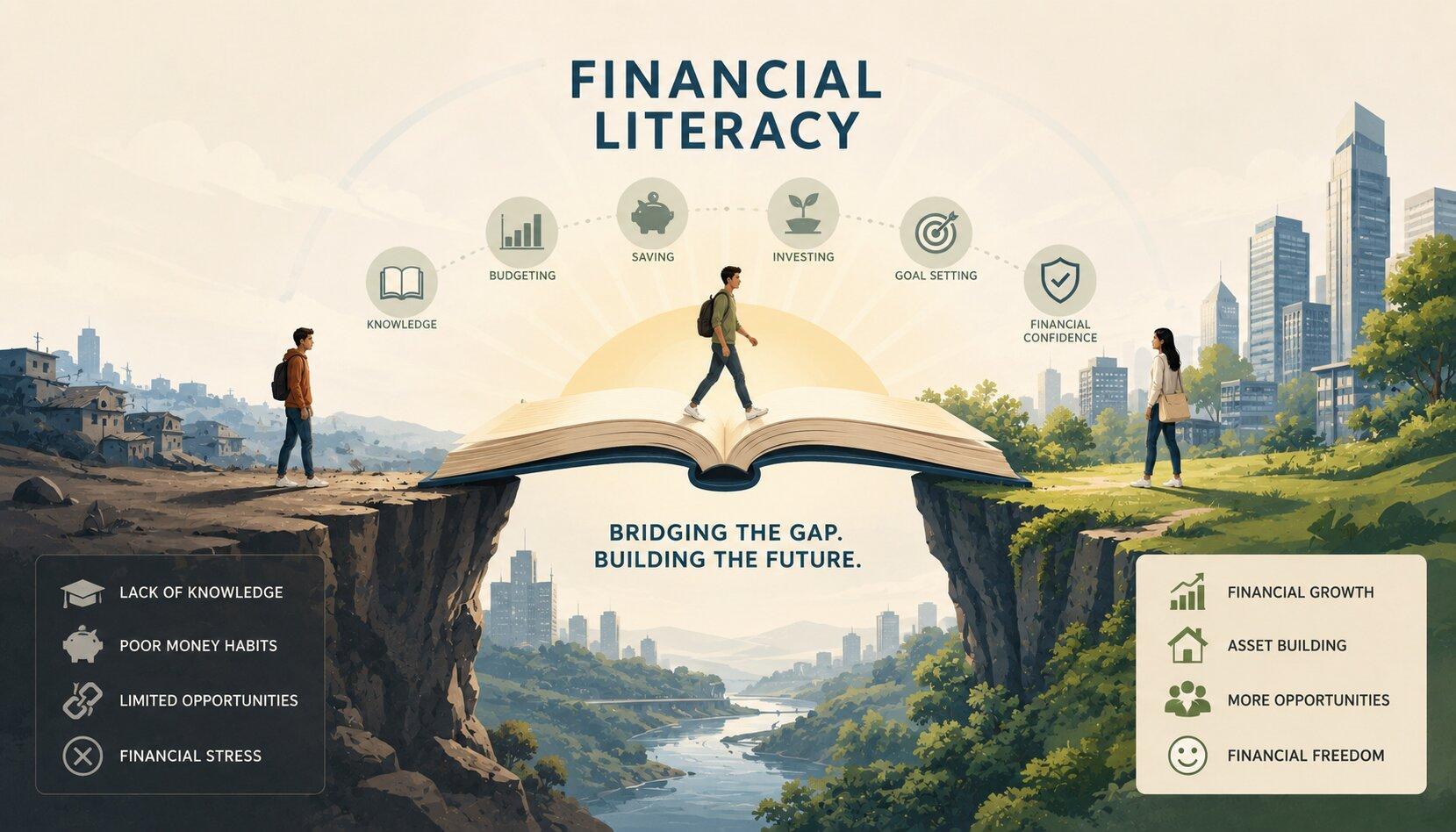
How Financial Literacy Quietly Closes the Wealth Gap (And Why Compound Interest Is the Real Equalizer)
About a third of US wealth inequality is a literacy story. That's the most cited academic estimate, and almost no one in the field actually quotes it. The mechanism behind it isn't willpower, it's compound interest, which doesn't care who's pulling on it. Two people on the same $60,000 salary, one saving 12% and one saving 3% for 35 years, end up roughly $746,000 apart. Here's what the data actually says, why the top-ranking pieces skip the math, and the calm middle position the debate keeps missing.
Showing 1 to 12 of 49 articles