Investing
Index Investing 101 — The Beginner’s Guide to Wealth Building
Education, not financial advice. This page may contain affiliate links: if you buy through one, Alpha Investing Group may earn a commission at no extra cost to you. How we earn money · Editorial policy
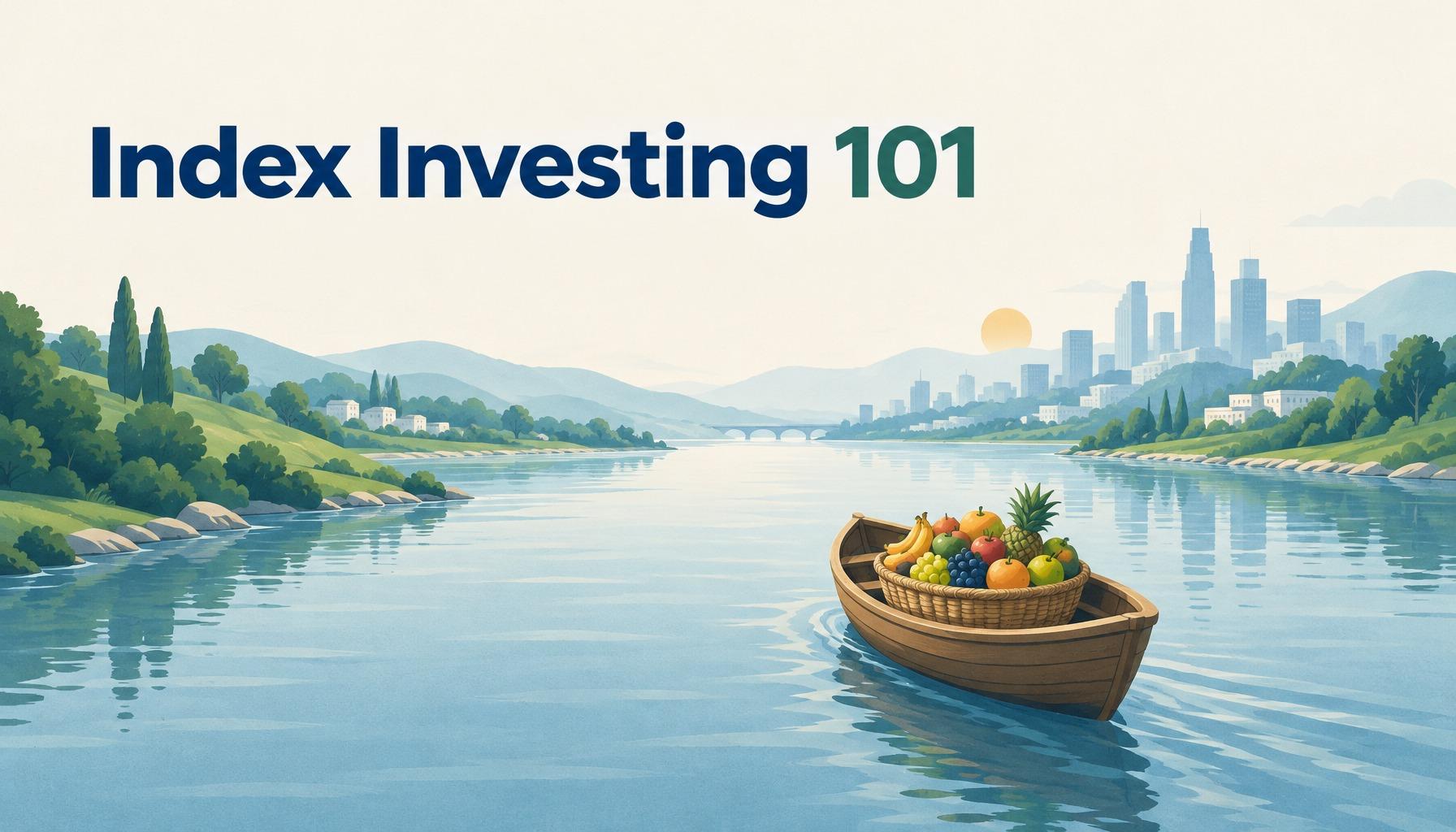
Index investing has quietly revolutionised personal finance around the world.
By simply tracking a market index, everyday investors can harness the returns of entire markets without the complexity of stock-picking. According to the SPIVA U.K. Mid-Year 2024 Scorecard, 76% of actively managed U.S. equity funds underperformed the S&P 500 over the first half of 2024, underscoring the reliability of passive strategies. Similarly, on Reuters, Calastone reports that passive funds in the UK attracted a record £29.6 billion in net inflows during 2024, while active funds saw outflows of £2.4 billion, a clear vote of confidence in low-cost index funds.
I’m telling you this because understanding the power of index funds is the first step towards building a robust, low-cost portfolio that minimises risk and maximises growth potential.
With index investing, you don’t have to be a finance expert to participate in market gains and secure your financial future.
In this guide, we’ll walk you through everything you need to know to start index investing with confidence and achieve long-term wealth growth.
What Is Index Investing (and Why It’s So Popular)?
Index investing is a passive strategy where you buy funds designed to track the performance of a market benchmark—such as the S&P 500 in the US or the FTSE 100 in the UK—rather than picking individual stocks or timing the market. Index funds hold a portfolio of securities that mirror the target index, providing instant diversification in one simple product.
It has surged in popularity because it combines broad market exposure with minimal cost and effort. In 2024, 65% of active large-cap US equity funds underperformed the S&P 500, underscoring how difficult it is for fund managers to beat the market over time. At the same time, UK investors poured a record £27.2 billion into stock markets last year, driven largely by index-tracker funds dominating net inflows, according to Reuters.
This remarkable shift highlights why everyday investors increasingly choose index investing: it offers market-matching returns without the complexity or high fees of active management.
Benefits of Index Investing
- Low costs: Index funds typically charge a fraction of the fees compared with actively managed funds. According to Forbes, Many leading index ETFs and mutual funds have annual expense ratios below 0.10%, whereas the average active equity fund fee hovers around 0.70% or more.
- Broad diversification: By mirroring an entire index, you gain exposure to hundreds or thousands of securities in one purchase, reducing the impact of any single company’s poor performance on your portfolio. For actionable principles on spreading risk and maximising returns, explore our Top 8 Rules for a Diversified Portfolio guide.
- Consistent market returns: Historical data shows that over the long run, broad market indexes have delivered reliable average returns, e.g., the S&P 500’s ~10% annualised return over decades. Index funds capture this performance, avoiding the pitfalls of underperforming active managers.
- Simplicity and transparency: You know exactly what you own — if the fund tracks the FTSE 250, for example, it holds those very constituents in the same proportions as the index. There’s no “black‐box” decision-making, making it easy for beginners to understand and manage, as Warren Buffet once said, “Risk comes from not knowing what you are doing.”
Potential Drawbacks and Risks of Index Investing
- No market-beating potential: By design, index funds can only match, not exceed, the performance of their benchmark. If you’re seeking to outperform the market, you won’t find alpha here — only market returns.
- Full exposure to downturns: Index funds mirror every up and down of the market. In bear markets, your investment falls in line with the index, with no active manager stepping in to mitigate losses.
- Lack of flexibility: You have no say over individual holdings; the fund must buy or sell exactly what the index dictates. This means you can’t avoid companies or sectors you dislike, nor take advantage of short-term opportunities.
- Concentration and tracking error: Some indexes, such as the S&P 500, are heavily weighted towards a handful of mega-caps, which can increase risk if those companies stumble. Small tracking deviations can also occur, meaning the fund’s performance may slightly lag the index due to fees or liquidity differences.
Index Funds vs. Other Investments
When deciding where to put your money, it helps to understand how index funds stack up against other common options. Below, I compare index funds with three alternatives — actively managed mutual funds and individual stocks — so you can see why a broad, passive approach often makes sense.
Index Funds vs. Actively Managed Mutual Funds
- Cost: Index funds typically have expense ratios well below 0.10%, whereas the average actively managed equity fund usually charges more than 0.70%, and sometimes way more, meaning you keep more of your returns over time .
- Performance: By design, index funds aim only to match the benchmark, but they benefit from low costs. In contrast, over 65% of active large-cap US funds underperformed their S&P 500 benchmark in 2024, illustrating how fees and trading costs can erode active managers’ gains .
- Transparency and simplicity: Index funds hold exactly the same securities and weightings as their target index, so what you see is what you get. Actively managed funds may shift holdings frequently, making it harder to predict your exposure and increasing turnover costs.
For a side-by-side comparison of these approaches, check out our in-depth analysis in Passive Investing vs Active Trading.
Index Funds vs. Individual Stocks
- Diversification: A single index fund might own thousands of companies, smoothing out the risk of any one business faltering. By contrast, investing in individual stocks concentrates risk — if one firm underperforms, your portfolio can suffer disproportionately.
- Expertise and emotional discipline: As Warren Buffett advises, most investors lack the time, information and emotional resilience required for consistent stock-picking success. Buffett recommends a simple allocation of 90% in an S&P 500 index fund for most investors, noting that “most will be better off with a passive approach”.
- Volatility and time commitment: Individual stock ownership demands ongoing research and monitoring for corporate news, earnings reports and valuation changes. Index funds, by contrast, require only occasional reviews — ideal for hands-off, long-term investors.
Each of these comparisons shows why index funds are often the go-to choice for both beginner and seasoned investors seeking reliable market returns without the complexity, cost or concentration risk of alternative strategies.
If you wish to explore other investment strategies, explore our guide on Best Investment Strategies To Learn for Beginners.
How to Start Index Investing — Step-by-Step Guide
Getting started with index investing is simpler than you might think.
Follow these five practical steps to begin building your low-cost, diversified portfolio.
1. Choose Your Investment Account
In the US, individual investors can choose a retirement account, such as a Roth IRA or 401(k), or a taxable brokerage account with firms such as Vanguard, Fidelity or Charles Schwab.
These providers offer commission-free trading on ETFs and mutual funds, minimal or no account minimums, and robust research tools to guide your fund selection. According to Bankrate, many leading online brokers now waive minimum deposits and continue to cut fees, making index investing accessible even for beginners.
In the UK, you can shelter gains from income tax and capital gains tax by using a Stocks & Shares ISA — allowing up to £20,000 per tax year — or a Self-Invested Personal Pension (SIPP).
Both wrappers support a broad range of low-cost equity trackers, offer tax relief on contributions, and allow your investments to grow tax-free until withdrawal. Platforms like Hargreaves Lansdown, Moneybox and Nutmeg streamline the process with low minimum investments and intuitive online interfaces.
By pairing the right tax wrapper with a user-friendly platform, UK investors can effortlessly build and grow an index-based portfolio.
2. Pick the market or index you want to invest in
Choosing the right benchmark is the first step towards building a portfolio that aligns with your goals.
If you’re aiming for broad exposure to the US equity market, funds that track the S&P 500 (covering large-cap companies) or the Total Stock Market (encompassing small-, mid- and large-caps) are popular starting points.
For investors focused on the UK market, index trackers tied to the FTSE 100 offer exposure to the nation’s largest blue-chip firms, while the FTSE All-Share captures a wider slice of the UK equity universe.
If you prefer a truly global approach, look for funds tracking indices such as MSCI World or FTSE Global All Cap, which combine developed and emerging markets into a single fund.
This choice sets the foundation for your diversification — one simple fund can give you hundreds or thousands of stocks in proportion to their market weight .
3. Evaluate Fund Options and Costs
Once you’ve chosen your target index, compare the available funds by 3 key metrics:
- Expense ratio: Expense ratios directly reduce your returns, so opt for the lowest available. Many leading US index funds now charge as low as just 0.015%.
- Minimum investment: ETFs typically require only the cost of a single share, making them highly accessible, whereas mutual funds may impose higher initial thresholds. For a comprehensive overview of ETFs, dive into our “What Is an ETF?” guide.
- Tracking error: Tracking error is the standard deviation of the fund’s performance versus the benchmark. You should choose funds with a low tracking error, ideally remain below 0.10%, to ensure you’re capturing the index’s returns accurately.
4. Buy the Index Fund
To invest in an index mutual fund, simply enter the dollar or sterling amount you wish to commit through your chosen platform; your order will be executed at that day’s closing net asset value (NAV), ensuring you pay precisely the fund’s per-share price on record at market close. Mutual funds aren’t traded intraday like stocks—placing your order any time before the market close means you’ll receive that day’s NAV, while orders placed after hours will fill at the next trading day’s NAV.
If you prefer an ETF, the process resembles buying shares: enter a market or limit order for your selected ticker, for example, VOO or IVV in the US, ISF or VUKE in the UK, during trading hours, and the transaction executes immediately at the prevailing market price. This flexibility allows you to see exactly what you’re paying, with potential to use advanced order types such as limit, stop-loss or fractional-share trades on many platforms.
Once you’ve made your initial purchase, consider automating future contributions. Many brokers let you set up regular investment plans, such as scheduling recurring transfers and reinvestments, so your portfolio grows on autopilot, harnessing the power of dollar-cost averaging without any manual effort.
For a curated selection of standout trackers, don’t miss our 14 Best Low-Cost Index Funds to Invest in for Long-Term Growth.
5. Monitor and Rebalance Occasionally
Once you’ve set up your index fund investment, it’s important to monitor your holdings periodically, typically on a quarterly basis.
This involves checking that each fund still aligns with your original goals — whether that’s growth, income or capital preservation — and making note of any significant market movements that could affect your long-term strategy. Simple tools like calendar reminders or watchlists within your brokerage portal can help you stay on top of performance without getting lost in day-to-day fluctuations.
Over time, your portfolio’s asset allocation may drift away from its target mix.
For instance, equities growing to 60% of your portfolio instead of the intended 50%. When this happens, you’ll want to rebalance by selling or adding assets to restore your desired proportion. I would recommend doing this once a year or whenever any holding deviates by more than about 5%.
Staying hands-off on daily trading but reviewing and rebalancing annually lets you capture market gains while managing risk without the stress of constant portfolio tinkering.
Conclusion
Index investing captures the market’s long-term growth with minimal cost and effort. Historically, broad market indices have consistently outperformed most active managers.
By choosing a low-cost index fund or ETF and committing to regular contributions, you can build a diversified portfolio that works for you around the clock.
Ready to take the next step? Start today by opening an ISA, SIPP, IRA or brokerage account, select your first index fund, and set up automatic investments — even small sums add up over time thanks to compound growth. With the clear process and best-in-class, low-fee funds at your disposal, you can confidently build a portfolio designed for steady, long-term wealth creation.
Your future self will thank you.
If you wish to explore index investing even deeper, don’t hesitate to explore our guide on why index funds might just be the best investment you can make.