Investing
Want to Stay Ahead in 2026? Here Are 8 ESG Investing Trends You Can’t Afford to Ignore
Education, not financial advice. This page may contain affiliate links: if you buy through one, Alpha Investing Group may earn a commission at no extra cost to you. How we earn money · Editorial policy
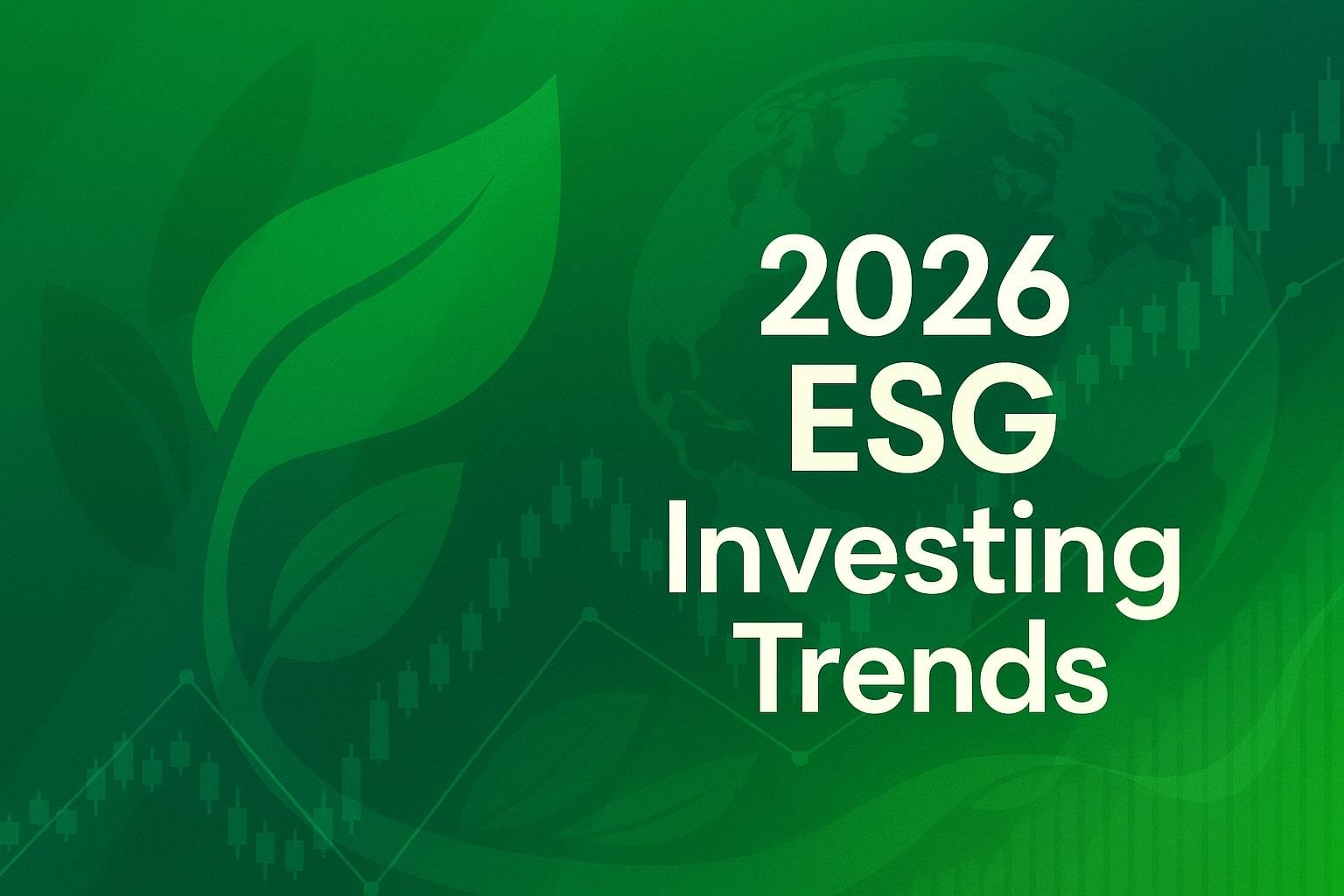
The era of “business as usual” investing is ending.
Today, more and more investors demand that their capital considers not only financial returns, but environmental, social, and governance factors as well. Already in 2024, the global market for ESG-aligned assets was valued at about US$33.6 trillion, and forecasts suggest this could surge well beyond US$125 trillion within a decade. At the same time, a global study by the Journal of Environment Management, covering 3,332 listed firms between 2011 - 2020, found a statistically significant positive correlation between strong ESG performance and better corporate financial outcomes. As an investor, you can no longer ignore the structural shift under way. Understanding where ESG investing is headed isn’t just about doing good; it’s about positioning yourself for resilience and growth in a changing market.
By 2026, the next wave of ESG trends will shape which portfolios flourish and which fall behind.
1. AI and Big Data Empower ESG Monitoring
The fusion of artificial intelligence with sustainable investing is rapidly gaining momentum.
By leveraging big data, machine learning and advanced analytics, investors and companies alike, can assess ESG risk and impact with far greater precision than ever before. This matters because it transforms ESG from vague, self-reported aspirations into measurable, data-driven metrics, making it far harder for companies to “talk green” without backing it up. As a result, firms that adopt cutting-edge ESG monitoring may command a valuation premium.
In practice, this means your ESG lens should sharpen: treat ESG data with the same scrutiny you’d apply to revenue growth or debt-to-equity ratios.
2. ESG Disclosure and Regulation Become Mandatory
Voluntary ESG reporting is giving way to mandatory disclosure in many jurisdictions, tightening the screws on companies that lag behind.
New regulatory regimes are emerging, requiring firms to provide consistent, comparable ESG data rather than selective anecdotes, so that investors can better assess environmental and social risks. Because investors increasingly demand transparency before committing capital, firms that fail to comply risk being penalised via higher cost of capital, regulatory fines, or reputational damage. That shift elevates ESG-compliant firms and penalises the rest.
That means ESG credentials are quickly becoming as important as balance-sheet strength.
3. Growth of Green Bonds, Sustainability Bonds and Other Transition Instruments
Sustainable finance instruments, such as green bonds, sustainability-linked bonds and transition loans, are becoming mainstream tools for funding decarbonisation and other ESG-aligned projects.
The green bond market alone has reached a total market size exceeding US$2.9 trillion, and issuance is rising sharply. This matters because it provides investors with a direct, fixed-income route to support, and benefit from, companies making tangible advances in environmental sustainability. As the pool of ESG-labelled debt grows, debt investors no longer need to choose between yield and sustainability.
Hence, it offers a diversified entry point into ESG themes beyond equities, combining income, lower volatility and ESG exposure.
4. Nature-Positive Investing: The Focus Is Expanding Beyond Just Carbon
ESG is expanding beyond carbon emissions and energy transition.
Environmental investors are increasingly focusing on biodiversity, land use, water stress, ecosystem impacts, and other “nature-positive” metrics. This shift reflects growing scientific and public recognition that ecological collapse comes not just from emissions, but also habitat destruction, species loss and resource depletion. The consequence: companies with robust biodiversity and land-use policies may attract a growing share of capital as regulators, lenders and consumers demand broader environmental stewardship.
In 2026, thus, a truly green portfolio needs to look beyond carbon footprints and evaluate ecological impact in the round.
5. Supply-Chain Transparency and Due Diligence Become a Core ESG Filter
Investors are increasingly treating opaque supply chains as material ESG risk, including poor labour practices, environmental damage, or hidden carbon costs upstream can now derail entire investment theses.
That makes supply-chain transparency and traceability a central ESG screening criterion. Companies that can map, monitor and report their suppliers, not just direct vendors, but every tier, stand out. Transparency is now a competitive advantage, not a nice-to-have.
Now, your due diligence must expand beyond headline ESG ratings. You will want to inspect supply-chain disclosures to avoid hidden ESG-related liabilities or disruptions.
6. SMEs Get Pulled Into the ESG Spotlight
ESG is no longer reserved for large corporates.
Increasingly, smaller firms and mid-cap companies are being drawn into ESG frameworks, under pressure from regulations, supply-chain demands, and investor expectations. Smaller firms with solid ESG policies may thus represent a new frontier of opportunity. They are often more agile, capable of faster transformation, and potentially undervalued if the market is slow to recognise their ESG credentials.
If you are willing to dig a little deeper, the small-cap ESG universe might turn out to be fertile ground and could yield asymmetric returns if the market later re-ranks them.
7. Rising Demand for Real Impact And Pushback Against “Greenwashing”
As ESG investing becomes more widespread, investors, regulators and the public are becoming ever more sceptical about surface-level sustainability claims.
They now demand credible, data-driven proof of impact, and not marketing slogans. That means firms with weak ESG transparency, vague commitments or dubious “green credentials” risk losing investor trust, or worse: regulatory backlash. In 2026, ESG without substance will be penalised.
This trend makes due diligence essential, digging into a company’s real ESG record (not just its labels) will be the only way to avoid hidden risks and poor performance.
8. ESG Integration Becomes Core to Mainstream Portfolio Strategy
ESG considerations are no longer niche.
They are increasingly becoming part of standard asset-allocation, risk assessment and portfolio construction frameworks at large institutions and funds. What used to be a “value-add” filter is becoming a baseline requirement. This matters because it changes the capital flows: more money will head toward ESG-compliant firms across sectors, altering valuations, valuations multiples and sector dynamics. ESG-aligned firms could outperform purely financial plays.
Integrating ESG into a long-term strategy isn’t about virtue alone.
It may become essential if you want resilience and competitive edge in a shifting market.
In a nutshell…
In a world where ESG is becoming central to how capital is allocated, sustainable investing is no longer a fringe preference. It’s fast becoming a strategic necessity.
Integration of ESG isn’t an optional extra; it’s part of the baseline for staying relevant and resilient in the markets.
Is this a journey you’re ready to join?