
The library
Every guide we’ve written
48 free guides on investing, personal finance, real estate, and crypto — written for younger readers building financial literacy from zero.
New to some of the terms? The money glossary explains 55 of them in plain English.

Investing
Tax-Efficient Investing for Beginners: How to Keep More of Your Returns (2026 Rules)
The account you hold a fund in can matter more than the fund. A beginner's guide to tax-efficient investing, with 2026 IRS limits, capital gains rates and a worked example.

Investing
Top 8 Economic Indicators Every Investor Needs to Know
Every investor dreams of beating the market, but too often they chase price movements instead of understanding the economic forces at play. Without decoding key economic indicators, your portfolio decisions operate on guesswork, exposing you to unexpected downturns. Years of academic studies and historical crashes reveal that investors who ignore metrics face underperformance and painful drawdowns. By recognizing how these data points interact, you can anticipate market shifts rather than react to them blindly. Mastering these 8 Economic Indicators is the key to transforming uncertainty into strategic advantage.

Investing
Index Investing 101 — The Beginner’s Guide to Wealth Building
Picture your savings quietly growing, almost without effort, while you get on with what matters most. Index investing makes this possible by tracking broad market indices with minimal cost and fuss. In fact, S&P Dow Jones Indices reports that over 65% of active large-cap US equity funds underperformed the S&P 500 in 2024, illustrating the power of passive strategies to deliver steady market returns. Whether you’re saving for a first home or planning your retirement, harnessing index funds can simplify your financial journey and help you stay on track. In this guide, we’ll walk you through exactly how to start index investing with confidence and clarity.
Investing
These 8 Daily Habits Will Secure Your Financial Future
Imagine a future where every small daily decision propels you closer to financial freedom. By adopting these five simple habits, you transform everyday actions into powerful tools for wealth-building. Financial experts and research alike confirm that consistent, mindful practices can compound over time into substantial savings and growth. Integrating these habits into your routine not only stabilises your current finances but also builds a resilient foundation for tomorrow's opportunities. Embrace these transformative habits now to secure the prosperous future you deserve.
Investing
This 6 Proven Investment Strategies Will Protect Your Purchasing Power and Beat Inflation
Inflation is quietly eating away at the purchasing power of your savings. Without proven strategies, every pound you’ve worked so hard to earn risks losing value over time. Financial experts have relied on eight battle-tested approaches to lock in real returns even when prices surge. By applying these targeted tactics, you’ll not only shield your portfolio from inflation’s bite but also position yourself for sustainable growth. Now is the time to discover how to protect your purchasing power and beat inflation once and for all.

Investing
Master Property Valuation in 6 Steps to Identify High-Value Deals And Make Confident Investment Decisions
Ever wondered why some investors consistently unearth hidden property gems while others scramble to break even? The secret lies in a disciplined valuation process that transforms uncertainty into clarity. I have distilled the art of property valuation into six powerful steps. By following this framework, you’ll slice through market noise, mitigate risk, and identify opportunities primed for exceptional returns. Master these steps, and you’ll confidently pinpoint high-value deals that supercharge your investment growth.

Personal Finance
Struggling with Impulse Spending? Here are 6 Psychological Tricks to Control Your Purchases
Are you caught in a cycle of impulsive purchases that leave your wallet empty and your goals unmet? Each unplanned buy not only drains your finances but also undermines your long-term financial security. Backed by extensive research in behavioural economics and psychology, experts have uncovered the hidden triggers behind our spending habits. By recognising and mastering these cues, you can take decisive control over your spending and steer your finances back on track. Discover these 6 powerful psychological tricks to reclaim your financial freedom and transform your purchasing habits today.

Personal Finance
How to Get Out of Debt: A 7-Step Plan, With the Real Cost of Avalanche vs Snowball
Card rates average 22.15% on balances that carry interest. Here's a 7-step plan to get out of debt, with an avalanche vs snowball example in real dollars.

Personal Finance
How to Build an Emergency Fund: A 7-Step Plan That Works on a Tight Budget
Only 63% of adults could cover a $400 surprise with cash. Here's how to build an emergency fund in two stages, where to keep it, and a plan in real numbers.
Investing
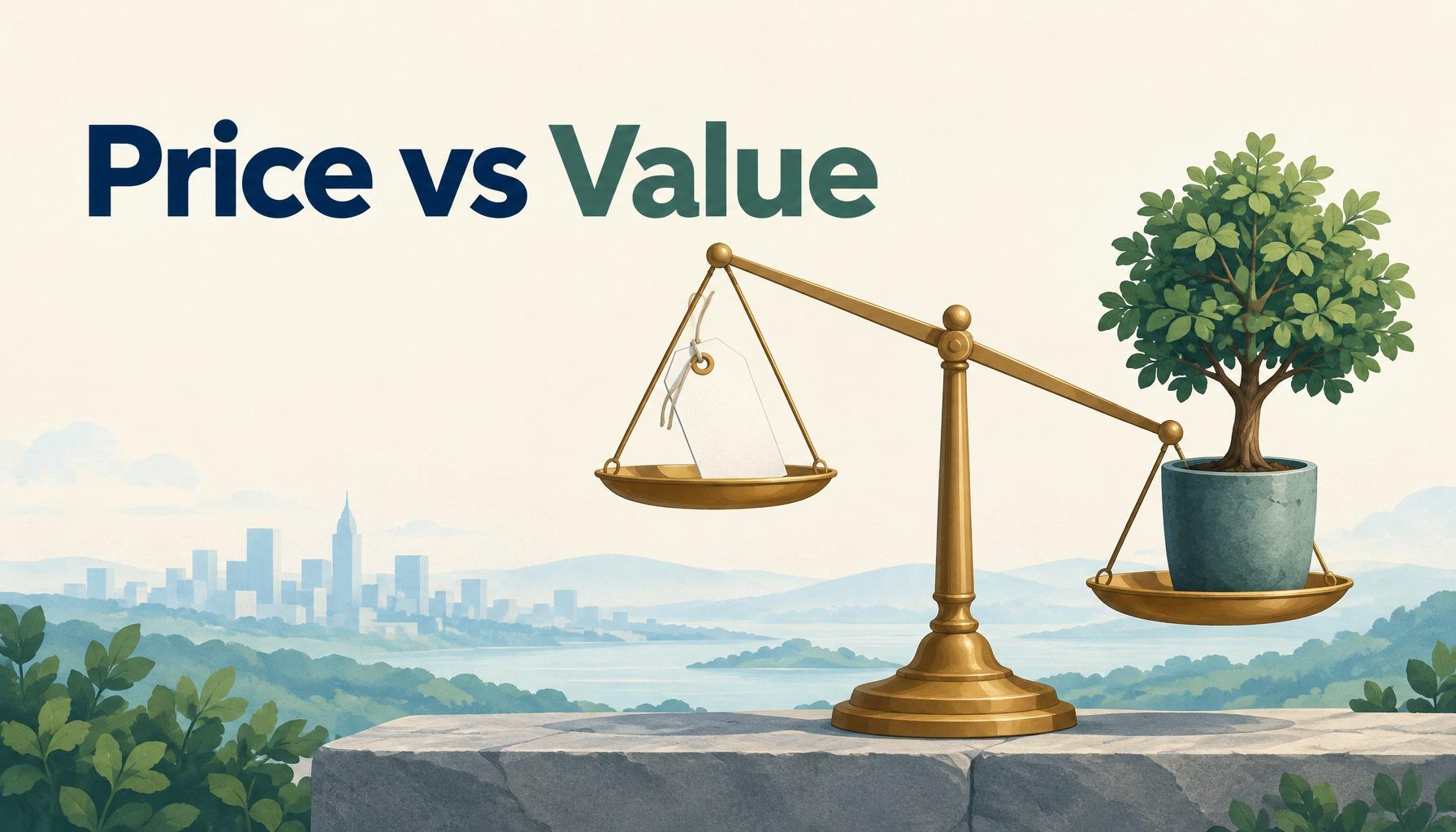
Price vs. Value: The Two Sides of Investment Thinking
What is something that markets, investors, and even economists often get wrong? It’s the distinction between price and value — a pair of concepts that are often conflated but fundamentally different. While market prices are easy to measure and dominate headlines, the true value of an asset lies in its potential to generate long-term cash flows, a principle rooted in sound financial theory. Understanding this difference is critical because the tools you use to assess an asset can shape your investment decisions and ultimately your outcomes. To succeed, you must learn to balance the short-term clarity of price with the long-term insight of value.

Investing
Financial Goals in Your 20s: 7 Money Milestones to Hit by 30, in the Order That Works
Seven financial goals for your 20s in the order that works, with 2026 numbers, a by-30 checklist and what "1x your salary by 30" really assumes.

Personal Finance
How to Make a Budget That Survives Real Life: A 7-Step Guide for Beginners
Making a budget takes an afternoon. Keeping it is harder. Here's how to build one from your real take-home pay, pick a method you'll keep and fix it when it breaks.