Investing
The Best Personal Finance Books (2026): 11 Worth Reading and 5 We Left Off
Education, not financial advice. This page may contain affiliate links: if you buy through one, Alpha Investing Group may earn a commission at no extra cost to you. How we earn money · Editorial policy
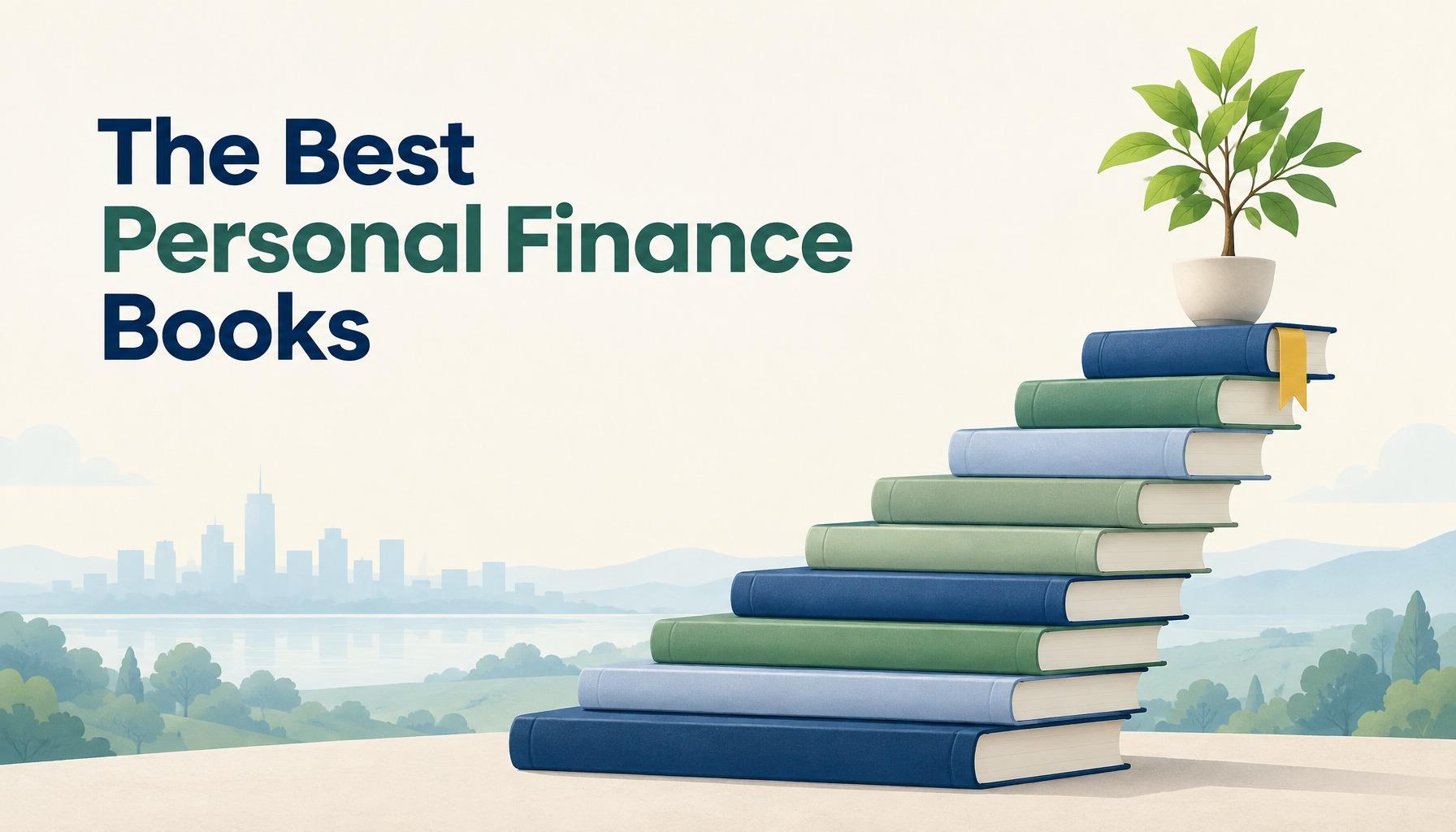
Most lists of the best personal finance books are really lists of the most famous ones. Those aren't the same thing. A book can sell millions of copies and still hand a 25-year-old advice that leaves them worse off for decades.
And people clearly need the help. The 2026 TIAA Institute-GFLEC Personal Finance Index found that US adults answered just 47% of its 28 money questions correctly, and Gen Z managed 38%. Most of us never learned this stuff at school, so a good book is still one of the cheapest ways to catch up. If you want a baseline first, our free financial literacy test takes a few minutes.
This 2026 list is for someone in their 20s or early 30s who wants to run their own money. It covers the whole job, so the books are grouped by what each one does for you:
- one mindset book to start with
- three setup books for budgeting, debt and automation
- three books on spending, the shelf most lists skip
- two books on investing basics
- two books for the long game
- five famous titles we left off, and why
If you only want investing books, our best investing books for beginners list goes deeper on that shelf. This one is about money as a whole.
How we picked these books
Plenty of books get called the best personal finance books. Every one here had to pass four tests:
- The core advice still works in 2026.
- It teaches habits you can repeat. Secret systems and "rich by 30" promises were out.
- The advice works on a normal paycheck. Most of our readers earn under $100,000.
- Where it covers investing, it leans toward low-cost, diversified and long-term.
We've also flagged each book's weak spot. Every one of them has one, and knowing it up front helps you use the book well.
Start with your money mindset
1. The Psychology of Money, by Morgan Housel (2020)
If you only read one book this year, make it this one.
Housel's book is 19 short stories about how people actually behave with money. Harriman House's page for the book puts sales at more than 10 million copies worldwide. The big idea is simple: doing well with money depends more on how you behave than on what you know. That's how a steady saver on a modest salary can end up wealthier than a high earner who can't stop spending.
What it won't give you is a plan. You'll finish it thinking differently, with no budget or new account to show for it, so pair it with one of the setup books below. If the behavioral side hooks you, our piece on the psychology behind money covers the biases Housel writes about.
Set up the basics: budgeting, debt and automation
These are the best personal finance books for beginners who need a working system more than a new philosophy. Pick one of the three. They overlap a lot, so choose the voice you can stand for 300 pages.
2. Broke Millennial, by Erin Lowry (2017)
Lowry wrote this for twenty-somethings who feel behind, and it's the friendliest book on the list.
It covers budgeting, credit card debt, student loans and the basics of investing. It also tackles the awkward stuff other books skip, like splitting a dinner bill when your friends earn more than you, or asking a partner how much debt they have. The chapters stand alone, so you can jump straight to whatever problem is loudest right now.
Some of the cultural references have dated, and the "millennial" label is aging fast. The money basics have held up fine. Lowry's follow-up on investing sits on our investing list.
3. I Will Teach You to Be Rich, by Ramit Sethi (second edition, 2019)
This is the most practical book here.
Sethi lays out a six-week program. You pay down debt, set up the right bank accounts, automate your saving and investing, and negotiate a few bills. On spending, he skips the guilt: work out what you love, spend on it happily, and cut hard on everything else. Get the 2019 second edition, which added more than 80 pages, including new material on money psychology.
The voice gets salesy in places, and Sethi runs a business that sells courses. You don't need any of them. Everything in the book works on its own.
4. Get Good with Money, by Tiffany Aliche (2021)
Pick this one if you want a full checklist.
Aliche was a preschool teacher who lost her job in a recession and had to dig out of a deep financial hole. Her book walks through ten steps to what she calls "financial wholeness." It starts with a bare-bones "noodle budget," the minimum you need to get by, then moves through saving for emergencies, debt, credit, insurance and naming beneficiaries. Almost no other beginner book gets to that last part. A paperback edition came out in March 2026.
It's long and packed with worksheets. Some readers love that, and others stall by chapter three. If debt is your most urgent problem, pair it with our guide to getting out of debt.
Rethink how you spend
Most book lists jump from budgeting straight to investing and skip everyday spending, which is where most money leaks out. These three books fill that gap.
5. Your Money or Your Life, by Vicki Robin and Joe Dominguez (revised 2018)
This book turns prices into hours.
Its core exercise is working out your real hourly wage once commuting, work clothes and other job costs come out. Then you look at each purchase as hours of your life. If your real wage is $15 an hour, a $120 pair of sneakers costs you a full eight-hour day. That one reframe can change spending habits more than any budgeting app.
The book, a nine-step program for reaching financial independence, has sold more than a million copies, and the 2018 revision added index fund investing, side income and tracking your money online.
It's a slow read, and the frugality sections can get preachy. Do the hourly-wage exercise even if you skip the rest.
6. The Art of Spending Money, by Morgan Housel (2025)
It's the newest book on the list, and it covers ground the others mostly ignore.
Published in October 2025, Housel's follow-up is about the other half of money: using it. There are no budgets or formulas. Instead, Housel looks at why people spend the way they do, often to impress other people rather than to make their own lives better. He argues that the most valuable return on money is peace of mind.
Like his first book, it's heavier on ideas than instructions. And if you're still carrying credit card debt, save the chapters on spending for joy until the balance is gone.
7. The Millionaire Next Door, by Thomas Stanley and William Danko (1996)
Thirty years on, it's still the best cure for lifestyle envy I know of.
Stanley and Danko surveyed wealthy American households. Many of the millionaires they found lived in ordinary neighborhoods, drove used cars and spent well below their means. Plenty of the people with flashy houses and cars had high incomes and surprisingly little wealth. The lesson still holds: what someone spends tells you almost nothing about what they own.
The data is from the 1990s. Critics such as Nassim Taleb also point to survivorship bias, since the book studies people who got rich and leaves out the frugal savers who didn't. Treat it as a book about habits. It doesn't promise that frugality alone makes anyone a millionaire.
Learn investing basics without the hype
You don't need ten investing books. One or two will do, as long as they explain why cheap, broad, long-term investing works and why sticking with it matters most when markets fall.
8. Just Keep Buying, by Nick Maggiulli (2022)
Maggiulli's first book walks you from saving into investing, with the numbers to back each step.
The first half is about saving, including his argument that you may need to save less than the scary targets suggest. The second half covers investing. His best-known finding is that saving up cash to buy the dip usually loses to simply buying on a regular schedule. The title is the advice.
There are a lot of charts. If that isn't your thing, the next book makes the same core case in plainer language.
9. The Simple Path to Wealth, by JL Collins (revised 2025)
Nobody explains index investing more warmly than Collins.
He started by writing letters to his daughter about money, posted them on his blog, and turned them into this book in 2016. The message is short: avoid debt, spend less than you earn, put the difference in a low-cost, broad stock index fund, and leave it alone through crashes so compounding can do its work. In May 2025 he released a revised and expanded edition, which is the one to buy now. To see what cheap funds look like in practice, our list of low-cost index funds compares the main options.
Collins recommends 100% stocks while you're building wealth, and he's upfront that it only works if you can sit tight when the ride gets rough. Know how you'd react to a 30% drop before you copy his mix.
Plan for the long game
These two zoom out to how wealth builds over a whole career.
10. The Algebra of Wealth, by Scott Galloway (2024)
Galloway doesn't sugarcoat anything, which is the main reason to read him.
He's a business school professor at NYU, and he boils financial security down to a simple formula built on focus, stoicism, time and diversification. His career advice is the most useful part for young readers. Follow your talent rather than your passion, keep your spending in check, and let time and diversified investing do the heavy lifting. It debuted as an instant #1 New York Times bestseller.
Galloway writes from the top of the ladder, and some of his push-hard career advice assumes options not everyone has. Take the framework and adjust the intensity to your own life.
11. The Wealth Ladder, by Nick Maggiulli (2025)
This is the book to read once you've got the basics running.
Maggiulli splits wealth into six levels, from under $10,000 in net worth up to $100 million and beyond. His point is that advice has to match where you are. What works at Level 1 won't work at Level 6, so the book covers how your spending, income and investing priorities shift as you climb. His launch post on the six levels compares one-size-fits-all money advice to a doctor giving every patient the same treatment.
Most readers of this site sit on Level 1 or 2, so a few of the later chapters will feel far off for a while. I'd read them anyway. It helps to know which advice isn't meant for you yet.
Five famous books we left off (and why)
Most roundups of the best personal finance books still include several of these, often with no warning label. We think each one below fails at least one of our four tests.
Rich Dad Poor Dad, by Robert Kiyosaki, has one useful idea: assets put money in your pocket and liabilities take it out. Ramit Sethi, whose book made our list, suggests stopping after the first chapter. After that, he argues, the book drifts into risky investing ideas and even recommends multi-level marketing as a learning ground.
Think and Grow Rich, by Napoleon Hill, is a 1937 self-help classic built on desire, faith and persistence. Persistence is a fine lesson. But the promise that the right mindset brings riches clashes with everything this site stands for, which is boring habits repeated for years.
The Millionaire Fastlane, by MJ DeMarco, calls working a job, saving and investing in the stock market for decades the "Slowlane." DeMarco pushes readers to build a fast-scaling business instead. Starting a business can be a great goal. Writing off steady saving and index investing is the wrong lesson for most 25-year-olds, though, because that slow lane is the one that works for most people.
The 4-Hour Workweek, by Tim Ferriss, came out in 2007 and is about lifestyle design, outsourcing and remote work. It's a career book that keeps getting shelved with personal finance, and it says little about saving, debt or investing.
The Total Money Makeover, by Dave Ramsey, was the closest call. The debt snowball and Ramsey's "baby steps" have pushed a lot of people to clear their debt, and a 20th-anniversary edition came out in 2024.
The investing advice is where it falls down. Ramsey's own site tells readers to look for mutual funds that average 12% or more over the long term. We think that sets beginners up for disappointment once fees, taxes and a realistic mix of investments are counted. Use the debt chapters and take your investing cues from Collins.
A few titles from earlier versions of this list are good books on the wrong shelf. Bogle's The Little Book of Common Sense Investing and Malkiel's A Random Walk Down Wall Street belong on an investing list. Thinking in Bets and Economic Facts and Fallacies are about decisions and economics more than your own budget.
How to get more out of any book on this list
Buying three books in January and finishing none by March is the most common reading plan there is. A slower plan works better:
- Read one chapter a week with a notebook open, and write down one thing you'll do differently before you close the book.
- Pair each book with one action. Finish Sethi and automate one transfer. Finish Aliche and write your noodle budget. Finish Collins and look up the fees on the funds in your 401(k). Then start the next book.
- Re-read The Psychology of Money once a year. It lands differently after twelve more months of real money decisions.
- Drop a book that isn't working for you and swap in another from the same shelf.
At one chapter a week, all eleven could take a couple of years. That's fine. Nobody gives out prizes for speed-reading money books, and the habits stick around long after the book goes back on the shelf.