Personal Finance
The Illusion of Financial Security: Why More Money Isn’t Always the Answer
Education, not financial advice. This page may contain affiliate links: if you buy through one, Alpha Investing Group may earn a commission at no extra cost to you. How we earn money · Editorial policy
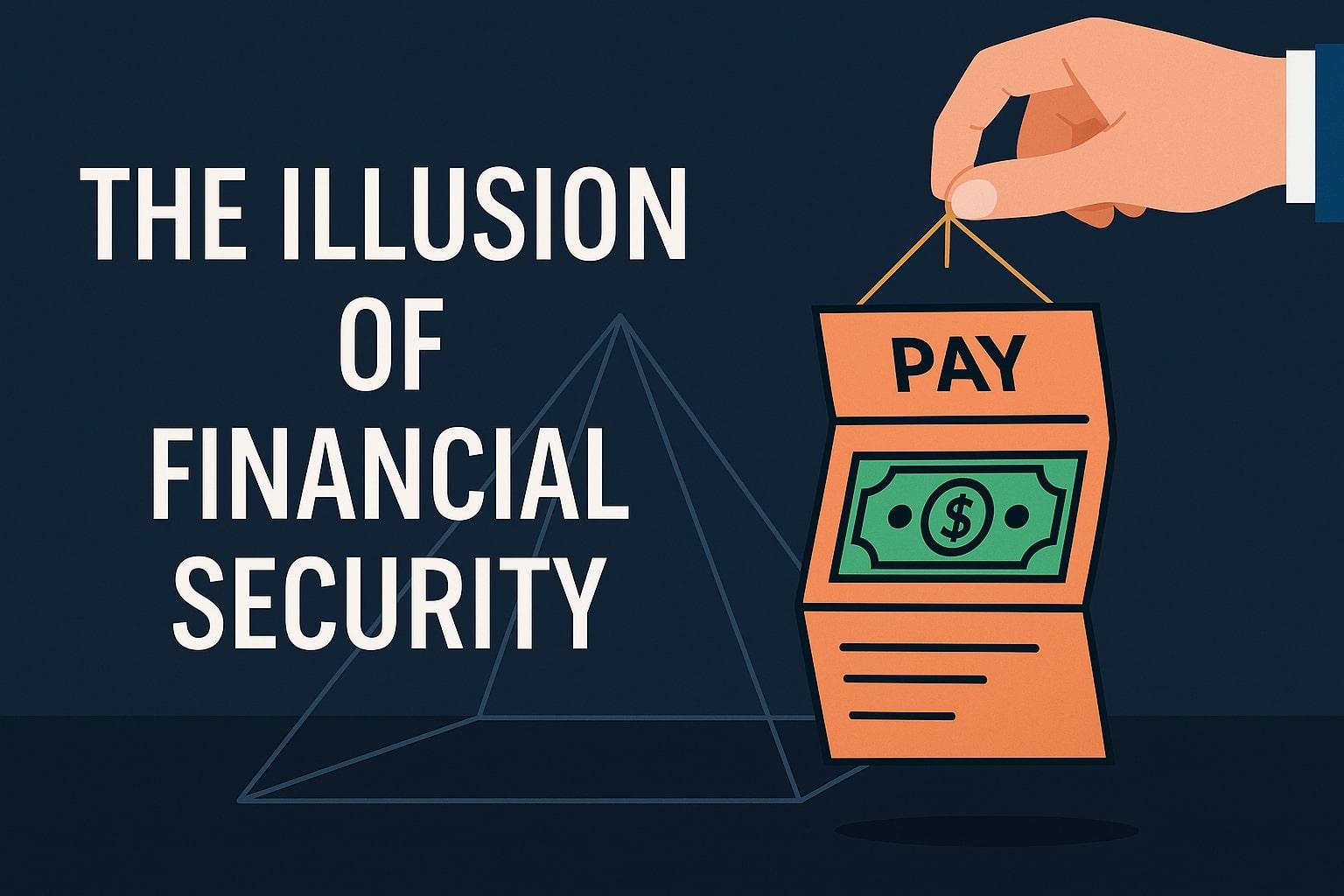
More money won’t save you if you don’t know how to manage it.
That might sound harsh, but it’s the uncomfortable truth behind why so many high earners still feel broke. Research on lifestyle inflation shows that even as salaries climb, savings rates often stagnate or decline. Worse still, studies from Business Insider reveal that bigger paychecks often trigger bigger debts and luxury spending, leaving households just as financially fragile as before. Chasing income without discipline is like building a house on sand — impressive at first glance, but destined to collapse. True security comes from deliberately controlling your money instead of letting it control you.
The harsh reality is this: financial freedom isn’t about earning more — it’s about refusing to fall for the illusion that money alone is the answer.
So, if more money doesn’t automatically buy financial security, what does?
The truth is that without discipline, self-awareness, and control, income growth becomes meaningless. Let’s dig into three powerful reasons why chasing a bigger paycheck often leaves people stuck on the same hamster wheel of stress.
1. The Trap of Lifestyle Inflation
Getting a raise feels like winning the game.
But the thrill of higher pay is usually followed by higher spending. If your lifestyle expands with every paycheck, your “progress” is nothing more than an illusion.
It starts innocently, such as upgrading the car, moving to a bigger flat, eating out a little more often. Yet a Bank of America analysis reported by CNN shows that one in five US households earning over $150,000 still live paycheck to paycheck. Think about that: these are people who outsiders assume are “rich,” yet they’re just as stressed about bills as someone on half the income. The conclusion is obvious. Lifestyle inflation devours raises before they ever build security. And that matters because every pound or dollar you let slip away is one less working for you.
In short, more income without restraint equals a treadmill you can’t step off. And here’s the kicker: once your lifestyle rises, it’s incredibly hard to scale back. Which means the comfort you thought you bought with your raise is actually a trap.
The real takeaway? Security doesn’t come from a bigger paycheck.
It comes from breaking free of lifestyle inflation.
2. High Income + Bad Habits = Fragile Finances
Dreaming of six figures? Think again if your habits are still stuck in the past.
On the outside, a high earner looks financially untouchable. But appearances mean nothing if poor habits are rotting the foundation.
Picture the lawyer who earns £120,000 a year but drowns in credit card debt and carries no savings. Business Insider recently reported that even among professionals with six-figure incomes, many still feel financially insecure and stressed because overspending wipes out their advantage.
That’s the dirty secret of wealth: a bigger paycheck doesn’t erase bad behaviour. It multiplies it. The bottom line is that money magnifies who you are; it doesn’t transform you. The more you earn, the more expensive your mistakes become.
The truth is harsh. If you don’t fix your habits, you’ll stay financially fragile, no matter the salary. The credit cards, the lack of investing, the failure to plan. They don’t disappear with a raise, they scale. So your income might buy flashier distractions, but it won’t buy peace of mind.
Here’s what counts: discipline builds resilience, and resilience beats income every time.
3. Control and Stability Matter More Than Salary
Too many people confuse earning power with safety.
But paychecks can vanish overnight, while true stability outlasts storms. Relying only on income is like building a house on sand. It looks strong until the first storm tears it apart.
Consider what happens in a recession when high earners lose their jobs. According to the Financial Times, the Financial Conduct Authority has found that nearly half of UK adults have cut back on saving and investing because rising living costs leave them vulnerable. That’s not just lower-income families. It’s middle and high earners, too, stripped of control the moment the income stops flowing. The truth couldn’t be clearer: income is temporary; stability is lasting. And that distinction is the difference between financial confidence and constant anxiety.
Control means having savings, investments, and multiple streams that protect you when life throws punches. It’s that safety net that turns uncertainty into inconvenience rather than catastrophe. And the sooner you accept that, the sooner you stop mistaking income for security.
The lasting truth? Salaries come and go, but control is what makes you untouchable.
In a tiny nutshell…
The biggest lie in personal finance is that more money equals security.
The truth is, control beats income every time. Real wealth is measured by how long you can last when the paychecks stop, not how big they are when they arrive.
And until you accept that, you’ll always be running on a treadmill that goes nowhere.